F. Roger DEVLIN
Ex: http://www.counter-currents.com/
Andrew Fraser
Reinventing Aristocracy:
The Constitutional Reformation of Corporate Governance
Brookfield, Vermont: Ashgate Publishing Company, 1998
If you own even a single share of stock, you have probably been pestered with letters requiring your opinion on matters of corporate policy well beyond your competence to decide. Should the firm add Joe Schmedlep to its Board of Directors? Do you approve the proposal (200 pages long) for the creation of a new subsidiary? Should the company outsource accounting and make its own ball-bearings, or find a ball-bearing supplier and do its own accounting?
You are holding stock in this company for one reason only: you think you might one day be able to sell it for a higher price than you bought it. Your natural reaction to the letter, therefore, is to toss it in the trash. “Rational apathy” is Professor Fraser’s useful term for this.
The company, of course, knows that you will feel this way. So, reducing the demand on your attention to an absolute minimum, they are even telling you how to vote: normally, they “recommend” that you approve all their proposals. Still, you must find a pen, check a box, stuff the paper in an envelope, and mail it in. “No way,” you say; “into the can.”
If you are lucky, the matter will end there. But sometimes the law forbids the company from acting without consulting its owners—and that’s you, as long as you hold their stock. So they may pursue you further. I have known of people on vacation receiving emergency phone calls from frantic boards of directors seeking their views on matters wholly unintelligible to them. “Shareholder democracy,” this is called. Does it sound like any way to run a business? Professor Fraser thinks not, and it is hard to disagree with him.
On the other hand, there also exists a class of persons who take their shareholder rights with extreme seriousness. Armed, perhaps, with a single share of company stock, they march into the annual meeting, head high, and seize the agenda: is the firm protecting the ears of homosexuals in its employ from disagreeable pleasantries? Has it provided reasonable accommodation for deaf, dumb, and blind quadriplegics? Might its manufacturing process bring about the extinction of the critically-endangered Rocky Mountain Stinkweed? Has, in short, the base pursuit of lucre made the greedy capitalists forgetful of justice and righteousness?
Very often, these moral crusaders have bought stock only for the privilege of delivering their tirades. Corporations have been forced to devise procedural methods for limiting such people’s ability to monopolize shareholder meetings. Surely allowing them to push management around would be no way to run a business either. But then isn’t “shareholder democracy” a bit of a sham?
Well, yes it is, says Professor Fraser. His central thesis is that the public would be better served by a smaller, more committed “shareholder aristocracy.” The term aristocracy is “a metaphor for the civic virtues that a free people might expect of their leaders in politics, business and intellectual life” (p. 1). It should not conjure up a picture of effete fops dancing the minuet at Versailles. Fraser’s proposed aristocracy would even be self-selecting rather than hereditary (pp. 21-22).
Fraser quotes Christopher Lasch’s remark that “the value of cultural elites [such as an aristocracy] lay in their willingness to assume responsibility for the exacting standards without which civilization is impossible.” Such an elite must “live in the service of demanding ideals.” Ortega y Gassett similarly writes that “nobility is defined by the demands it makes on us—by obligations, not by rights” (p. 8).
Why, after all, does the prima donna of the shareholders’ meeting strike us as silly? Because he has no obligations toward the company, its employees, its other shareholders, its customers, or the general public. The neo-puritan crusader accuses others and poses demands, but bears no responsibility if his own proposals lead to disaster.
In smaller, family-run businesses the issue of placing responsibility hardly arises; everyone can see that the buck stops with the owner, who also runs his business from day to day. But in the modern corporation described by Berle and Means, characterized by a “separation of ownership and control,” it becomes unclear who is responsible for corporate acts.
The law at least makes clear that it does not hold individual shareholders responsible. This is the principle of limited liability, which only gained widespread acceptance around the middle of the nineteenth century. A company has legal personality, and can be held liable for harm it causes (think of the Exxon Valdez oil spill of 1989). But the individual shareholder cannot be held liable for any amount greater than the value of his stock. Thus, while it is possible to lose all the money you invest in stocks, it is not possible to lose more than that. Would you want to invest in Exxon if you knew you would have to share responsibility for Exxon Valdez-type disasters?
Probably not. Limited shareholder liability has even been credited with causing the industrial explosion of the late nineteenth century. Nicholas Murray Butler, President of Columbia University wrote in 1911 that “the limited liability corporation is the greatest single discovery of modern times. . . . Even steam and electricity are less important.” (Some scholars dissent; cf., e.g., Michael S. Rozeff, “Limited Liability” at http://www.lewrockwell.com/rozeff/rozeff28.html.)
Who if not the owners, then, should bear public responsibility for corporate behavior? The next likeliest suspect would seem to be the managers. But they have been notably successful at disclaiming responsibility on the grounds that they are mere agents of the shareholders, and act only upon the objective demands of economic efficiency.
This view finds support from surprisingly many scholars. They believe our dominant form of corporate governance is itself the result of market competition. The Berle and Means model, combining shareholder passivity with managerial irresponsibility, exists today, in other words, because it has proven itself the most economically efficient corporate constitutional model in free competition with all possible alternatives. (Best not ask these theorists to fill you in on the historical details.)
Professor Fraser sarcastically speaks of this view as a “cult of the divine economy” in which sovereignty has slipped from human hands into an impersonal system of economic demands. These demands rule over us like the inscrutable God of the Old Testament (p. 11); the managers function as its priesthood, interpreting and carrying out the divine will. No mere mortal is responsible.
Now, the market undoubtedly does impose some constraints on managerial behavior. But it would be difficult to believe, e.g., that the demands of profitability are what force the entertainment industry to churn out movies which consistently insult the religious and moral sentiments of the majority of American moviegoers. “Diversity training” does not improve efficiency either, but managerial enthusiasm for this fad goes well beyond what could be explained by fear of lawsuits. I will not undertake to determine the precise degree of freedom which the market leaves to managers, but it is certainly greater than zero.
Furthermore, a markedly different corporate structure is the rule in both Germany and Japan, where relatively “permanent” shareholders exercise control over major enterprises (pp. 17, 62).
Professor Fraser distinguishes “accountability for behavior” from “responsibility for actions.” Managers are accountable to shareholders for keeping firms profitable; this involves responding to the objective economic demands of the market. But human action is more than a reaction to circumstances. Managerial decisions affect not merely the profitability of the firms they direct but also the life of the larger society within which their firms operate. Financial accountability is too narrow a notion to substitute for public responsibility.
For example, “whenever risks generated by corporate activity become known, someone must decide how much danger to allow and assess the costs of preventing the danger.” Think of automobile design: morally responsible decisions about safety features may not be economically efficient. “Whenever government has failed to provide a policy of its own, corporate officials decide in ways that are practically binding for the ordinary citizen” (p. x). Just as Henry Ford’s customers were offered the Model T in “any color so long as it’s black,” the public today has neither any voice in nor any recourse from the safety decisions made on their behalf.
The author oddly neglects to mention government regulation at this point. Safety is, in fact, the main pretexts for such regulation, which is often onerous, arbitrary, and of questionable benefit to the public. While others worry that government is strangling private initiative, Professor Fraser baldly asserts that “the problem we face is the appropriation of public power by the corporate sector” (p. 2). Note, however, that he never recommends governmental regulation as a solution to the problem of corporate responsibility.
Safety is merely one example. Corporations today—like governments—allocate values by controlling the distribution of goods, services, honors, statuses, and opportunities. Corporate policies can be made binding and effective through the use of sanctions. These need not involve physical coercion or violence: punishment commonly takes the form of severe economic loss or a psychologically painful loss of social status. In any case, the modern corporation is private only in the formal sense that it remains extra-constitutional (pp. 73-74). Being a law unto itself, it is a legitimate target for constitutional reform.
“Corporate politics continues as a secretive affair conducted in corridors and behind closed doors,” Fraser points out; “our problem is that corporate elites have freed themselves only from constitutional politics. (p. 22). This, he believes, is leading us toward a kind of “neo-feudalism,” in which structures of corporate authority are based upon exchanges of services between persons: a system of private patronage without any place for rational deliberation or public involvement. Resistance by wage-earners would become virtually impossible, due to their economic dependence upon the managerial elite. (Professor Fraser is aware of the “managerial revolution” theory of James Burnham and Sam Francis.)
The author harks back to an older legal tradition which recognized the corporation not merely of a profit-generating system but as a civil body politic—a kind of tiny republic, in fact. In America before about 1840, the business corporation was created by a special act of a state legislature: the charter, which explicitly vested public service functions in it. Turnpikes, e.g., were not merely investments on the part of those who built and operated them, but were also authorized in order to provide a service to the community. Even banks and insurance companies were understood as hybrid amalgams of private interests and public purposes. The charter endowed each corporation with a specific raison d’être, and the corporation could be legally challenged if it acted outside its sphere of competence. Corporate decisions were sometimes voted upon by members according to the principle “one man one vote”; more often, caps were set upon the voting power of the larger shareholders. These constitutional features cannot be explained solely in terms of economic utility (p. 27).
As the nineteenth century progressed, special charters were replaced by general rules of incorporation. The notion of a defined sphere of corporate competence fell by the wayside, so that directors could seize upon any business opportunities that might arise. The principle of “one share one vote” became firmly established, entrenching monied interests. Ordinary shareholders came to be understood not as partners in a common public enterprise, but as passive investors whose preferences are fixed, unitary and homogeneous, viz., to maximize profits (p. 28). This assumed unanimity obviates the need for any deliberation on the public effects of their actions, such as is supposed to occur in a legislature. In Professor Fraser’s terminology, the bourgeois drove the citizen out of corporate life.
The nature of property itself was gradually transformed. Ownership once signified a form of personal dominion over the external things of the world. But property in a corporate entity does not carry with it the right of dominion over the physical plant and equipment, which remain the property of the corporation conceived as an entity distinct from the shareholders. Corporate shares establish instead a complex set of relationships between persons (pp. 18, 77). So complex, indeed, that a stockholder today would need to make an advanced study of international finance just to understand what it is he owns.
Yet Fraser notes the interesting circumstance that it is still illegal for a shareholder to sell his voting rights in a corporation. Such behavior is seen, perhaps inconsistently, as a violation of duty. Even corporate raider T. Boone Pickens “has been moved to outrage at the corrupt practice of vote selling, describing it as ‘un-American’ and akin to ‘prostitution’” (p. 37).
One thing these residual scruples may indicate is a still widespread feeling that the public good cannot safely be entrusted to a body of men motivated wholly by individual self interest and not liable for the effects of their actions. What is needed is a counterweight to managerial power which operates more effectively than our inherited system of an annual general shareholders’ meeting.
Professor Fraser’s central proposal is to establish a special class of corporate shares conferring both voting rights and responsibilities for corporate conduct. The ordinary investor will be able to buy stock up to some certain limit just as before. Meanwhile, “propertied persons could trade less diversity in their investment portfolios for the opportunity to play an active civic role in the governance of a narrower range of corporate enterprises” (p. 19). They would be expected to deliberate regularly with other shareholders and pass binding resolutions according to the principle “one man one vote.” This recognizes that the corporate enterprise involves deliberative rationality and not merely the pooling of economic assets. Such a voting procedure would counteract the plutocratic tendency of current corporate law.
Professor Fraser derives his model from classical aristocracy, an exclusive group of peers charged with public duties; but his proposal is a “reinvention” of aristocracy in that the peerage would not be a hereditary caste. In fact, his aristocracy would be entirely self-selected, and other investors would be free to exclude themselves from the order of corporate citizens. Such self-exclusion, “far from being arbitrary discrimination, would in fact give substance and reality to one of the most important negative liberties we have enjoyed since the end of the ancient world, namely, freedom from politics” (p. 22).
The central purpose of his proposal is to restore the role of collective deliberation in the conduct of public affairs, and he sees the ostensibly “private” corporate world as the venue where this can best be achieved today. “It may still be possible,” he concludes, “to govern corporations in the public interest without relying solely on the heavy hand of the nanny state” (p. 21).
Professor Fraser does not recommend simply imposing his republican model on all existing corporations:
It would be more useful to experiment with the concept in corporate enterprises whose business has an obvious public service dimension. Media corporations come immediately to mind. If media corporations have become surrogates and not just vehicles for public opinion, it may not be unreasonable to expect those firms to be governed in accordance with republican principles. So far the courts have not explained how a few autocratic media moguls can be expected to use their freedom from state interference to enhance rather than to corrupt the civic culture of constitutional democracy.
He goes on to mention “hospitals, universities and even prisons . . . tobacco, liquor and gambling interests . . . weapons manufacturers and defense industries generally” (p. 50).
The active shareholders would have to give up limited liability; they would be fully liable for the actions of managers under their direction. They “would become a political surrogate for the elusive ‘directing mind’ that the law requires as the sine qua non of corporate criminal liability. By holding active shareholders responsible for criminal misdeeds, the law could encourage them to create and sustain internal justice systems capable of preventing or punishing unlawful behavior by agents and employees of the firm” (p. 72).
The agonistic dimension of citizenship offers the real possibility of self-fulfillment, along with the dramatic risk of personal disaster. If Aristotle was right in claiming that man is a political animal, civic action may not be motivated solely by the hope of extrinsic rewards but also by the opportunity to exercise in public powers of reasoned speech and dramatic action [where] individuals compete for glory and recognition in the eyes of their peers. (p. 16)
Not to mention that their words would carry more weight than those of the itinerant one-share moralizers of today’s general shareholders’ meetings.
If the Western “democracies” were to implement Professor Fraser’s reform proposal, what could we expect? My guess is that the racial composition of shareholder boards would instantly become the biggest issue in politics and clog the courts with litigation. For similar reasons, I would be more enthusiastic about internal corporate judicial proceedings if I did not know that kangaroo-courts were already busy meting out punishment to white men who “offend” their colleagues. Professor Fraser is thinking of Cato and George Washington, but we would be more likely to get stuck with Al Sharpton and Catharine MacKinnon.
But these reservations are meant more in criticism of the present state of our civilization than of Professor Fraser, a contributor to TOQ who has gained international notoriety for defending the late White Australia policy to his ideologically besotted fellow-countrymen. A reading of Reinventing Aristocracy proves that long before emerging as a lightening rod for the “anti-racist” left, he had already demonstrated himself an independent thinker with an uncommon degree of political imagination.
TOQ Online, April 26, 2009






 del.icio.us
 Digg
Digg Facebook
 Fiction: en juillet 1940, Hitler parvient à forcer la main au général Franco qui laisse passer les troupes allemandes sur son territoire. Gibraltar tombe et les panzers, après avoir traversé le Maroc et l'Algérie, foncent sur Le Caire. 300.000 prisonniers français sont libérés et commis aux moissons. La popularité du vieux maréchal est au zénith. Un débarquement allemand a lieu en Irlande du Sud. Malte tombe aux mains des paras de la Luftwaffe de Goering. Churchill est mis en minorité et remplacé par Lord Halifax, qui fait la paix, en échange des puits de pétrole du Moyen Orient, qui restent sous contrôle britannique. Pourquoi faire la guerre dans ces conditions? Le succès de l'opération Barbarossa est quasi complet et, rapidement, les troupes de l'Axe font jonction dans le Caucase. Par un coup d'audace inouï (Skorzeny?), Vladivostok tombe. C'est la panique au Japon, qui se rapproche des Américains. Dans l'Empire, c'est le délire: d'ailleurs, à Berlin, on joue Sartre à guichets fermés! Dans cette atmosphère de triomphalisme, l'épuration ethnique dont sont victimes les Juiffss prend heureusement fin et l'Empire favorisera même, pour gêner les Anglais, la naissance d'un Etat hébreu, armé par l'Allemagne. A Berlin, l'aile modérée menée par Bibbentrop, le cher Otto Tabetz, ou Krommel élimine les “natzis” forcenés. Une fausse explosion nucléaire, vers 1943, calme les Américains, qui se contentent d'armer la résistance soviétique (Staline combat toujours en Yakoutie). Une vraie bombe, que le Führer obtient grâce à ses réseaux d'espions (juiffss?) aux Etats-Unis, assure définitivement la neutralité américaine. Hitler meurt le 30 décembre 1946, à la veille du réveillon. Speer, l'amiral Panaris et surtout Gersdorff entreprennent une première “dénatzification” et, de 59 à 78, Stendel, le Führer suivant, proscrit le racisme et le remplace par le différentialisme critériologique: les Juiffss sont incités à collaborer ou à émigrer en Israël, où ils forment une tête de pont de l'Empire.
  L'Empire est résolument non humaniste et rejette sagement les droits de l'homme, qui ne sont jamais que “les droits du client”: “droit de chier des litanies de progénitures débilo-crédulo-proliférantes, pulluliques, malsaines, ivres de tuer leur prochain ou de leur passer la Grande Maladie”. Car la Maladie, venue de l'Ouest est interdite dans l'Empire: un corps d'élite veille et nettoie, liquidant impitoyablement malades infiltrés par les démothalassocrates, agents d'influence de la pourriture utilitairo-protestante et militants nationalistes (des Gagaouzes aux Vourdalaks). Pas question d'affaiblir l'Empire! Les chrétiens, et les croyeux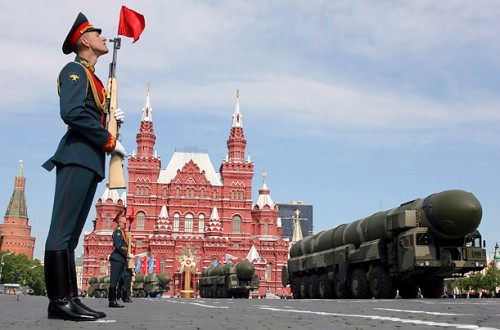
 “Non lo fo per piacer mio, ma per dare un figlio a Dio”, garantivano in rima baciata i camicioni da notte delle nostre trisavole. E diamo pure per buoni pudori e rossori di quelle spose e madri esemplari: ma non ci si venga a dire che tutte le signore dello stupido XIX secolo, con novecentesche appendici, erano così devote e vereconde. Non lo era sicuramente la celeberrima contessa di Castiglione, cugina di Cavour, e scelta dal conte per convincere Napoleone III a scendere a fianco dei piemontesi nella guerra contro l’Austria. Lei, «bocca sdegnosa, occhi grigi dal fascino inesplicabile» non se lo fece ripetere due volte e «in una camera tappezzata di Damasco di seta azzurra del castello di Compiegne» lo sedusse, convertendolo alla buona causa del patriottismo italico. Ma così come non era mai stata fedele al marito, «un ingenuo galantuomo ingannato ‘prima, durante e dopo’, non si consacrò certo a un esclusivo amore imperiale e concesse lo stropicciato fiore della sua (poca) virtù a una numerosa schiera di amanti, non disdegnando l’amore mercenario. Visto che per una notte di fuoco chiese a Lord Hertford un milione di franchi. Va detto anche che la vocazione libertina della nostra contessa era ben nota. Tanto è vero che un gentiluomo della corte di Napoleone, vedendola succhiare un sorbetto di fiori d’arancio, le chiese in tono pesantemente allusivo: “Le piace succhiare, contessa?”, e lei rispose ridendo: “Dipende da cosa…”».
 On connaît le refrain, il scande un demi-siècle d’antifascisme parodique. On le croyait inusable, mais il a vieilli. Il faut dire que la bête immonde a profondément mué. Elle ne porte plus des cornes, mais des Ray Ban. La chirurgie esthétique a adouci ses traits. Chemin faisant, on est passé des années 40 au CAC 40. C’est beaucoup plus fun. Il manquait un nom à cette nouvelle bête. Raffaele Simone lui en a trouvé un, c’est « le Monstre doux », titre de son dernier livre***, qui a fait pas mal de remous en Italie à sa sortie en 2009, dans un pays berluscosinistré. L’ouvrage n’est pas sans intérêt, même s’il n’apporte rien de nouveau, en tout cas rien qui n’ait déjà été dit par Tocqueville. Ce monstre doux, c’est l’Occident qui virerait à droite, selon Simone, mélange de Big Brother et de Mickey Mouse.
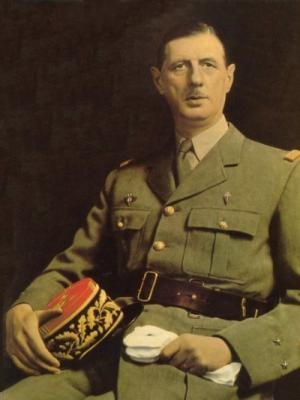 Thus the first priority was to keep these people as safe as possible from another slaughter. At the same time, Pétain hoped for a future renaissance through a “national revolution.” He has been attacked for that. Admittedly, all would be mortgaged by the Occupation. But really he had no choice. The “national revolution” was not premeditated. With all its ambiguities, it emerged spontaneously as a necessary remedy to the evils of the previous regime.


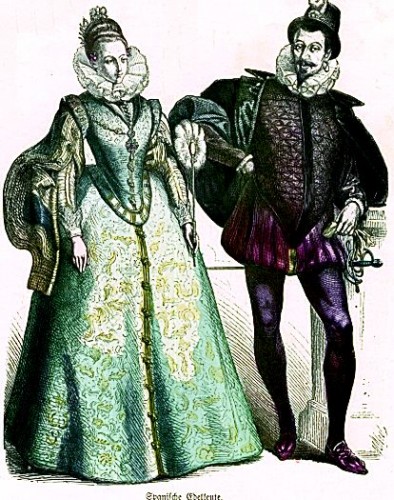

 I hear a lot of defeatist talk among White Nationalists. A recurring theme is that there are too many non-whites in America to even consider an all-white nation. The most optimistic solution is to partition the country into ethnically pure nations.
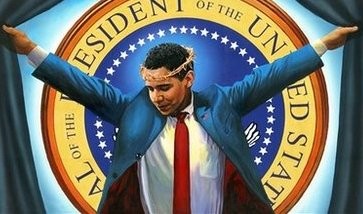


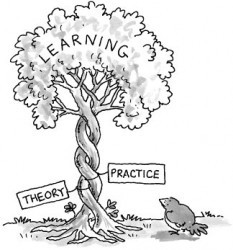
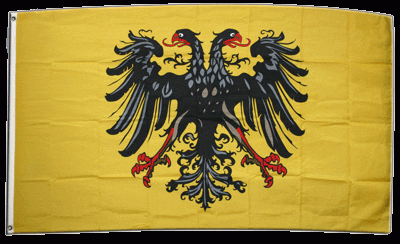
 John Zerzan is one of the leading advocates of the anti-civilization movement, communicating through speech, literature and action that modern society is unsustainable and harmful to our psychology and freedom. Following in the footsteps of Theodore Kaczynski, Zerzan is a radical anarcho-primitivist and believes that we must get rid of civilization itself, returning to a very simple lifestyle close to nature. His ideas confront commonly held beliefs about primitive people and about our path towards progress.
 German anthropologist Hans-Peter Dürr made a study during the 80’s, which described primitive tribes in modern time displaying extreme social guilt over nakedness and sexuality. Aren’t there other countless examples of primitive tribes where social and cultural norms uphold power and gender structures as part of everyday life?
 You’ve said that the “symbolic thinking” of modern man, including language, mathematics and time, limits and oppresses our freedom. What do you believe led up to the development of these things—why did humanity choose civilization culture and not primitive culture? Do we have a choice at all?
 What changes do you want to see being implemented as a part of reducing the negative impacts of globalization?
 Do you believe a collapse of the globalist order is inevitable, or is there a possibility for humanity to unite its best of minds and choose a different path?
 Depuis la fin des deux guerres mondiales et leur débauche de violences, l’Europe est « entrée en dormition » (1). Les Européens ne le savent pas. Tout est fait pour leur masquer cette réalité. Pourtant cet état de « dormition » n’a pas cessé de peser. Jour après jour, se manifeste l’impuissance européenne. La démonstration en a été assénée une nouvelle fois durant la crise de la zone Euro au printemps 2010, prouvant des divergences profondes et l’incapacité d’une volonté politique unanime. La preuve de notre « dormition » est tout aussi visible en Afghanistan, dans le rôle humiliant de forces supplétives assigné aux troupes européennes à la disposition des États-Unis (OTAN).
 E se l’11 settembre fosse colpa nostra? Non, come farneticato da qualche fanatico in preda a convulsioni anti-americane, che siano stati gli statunitensi ad abbattere le Twin Towers, magari con la complicità degli ebrei, in una riedizione un po’ stantia del complotto dei «Savi di Sion». No, in altro senso. E cioè nel senso che l’11 settembre sarebbe la «conseguenza logica, e prevedibile, della pretesa dell’Occidente di ridurre a sé l’intero esistente».


